
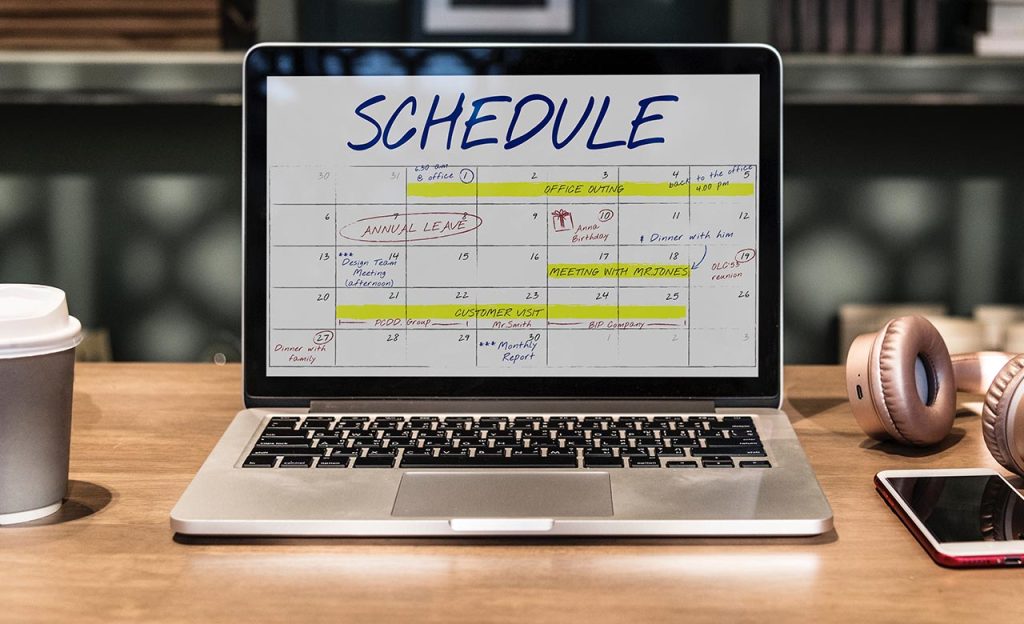
Call center appointment scheduling means trained agents answer calls, check your live calendar, book, reschedule or cancel appointments, and send confirmations and reminders, so your staff do not have to manage bookings by phone. Done well, it cuts no-shows, keeps calendars full and gives customers a quick answer at any hour.
A typical call center booking flow looks like this:
- Answer the call in your business name and confirm what the caller needs.
- Check availability in your scheduling software or calendar.
- Offer the earliest suitable times and book the slot.
- Collect the details your team needs, such as address, service type and contact number.
- Send a confirmation by text or email.
- Send a reminder before the appointment and handle any reschedules.
Appointment scheduling is an essential component in customer service that helps organizations and customers work together effectively. To ensure speed and pleasure in the management of session bookings, call centers are necessary. As a result, the complicated nature of arranging appointments in call centers is looked at in this article, along with its strategies, challenges, and technological advancements for improved efficiency.
Understanding the Importance of Scheduling
The scheduling of appointments acts as a connection between customer needs and company procedures. Waiting times are reduced and utilization of resources is maximized with timely and well-organized scheduling. Appointment scheduling done well increases client happiness and loyalty.
Challenges in Appointment Scheduling
Time zone modifications, scheduling issues, and last-minute cancellations are just a few of the difficulties call centers have when trying to schedule appointments. The procedure becomes more complex when staffing levels and facility accessibility are balanced with client preferences. Maintaining confidence and trust requires correct entry of information and avoiding scheduling mistakes.
Strategies for Effective Scheduling
The booking process is simplified and error rates are decreased through the use of a single central scheduling system. By providing flexible scheduling choices, such as mobile apps or online booking portals, you may respond to a wide range of customer preferences. Reminders and confirmations of appointments are examples of proactive interaction that reduces no-shows and increases dependability.
Leveraging Technology for Optimization
Repeated activities like meeting confirmation and rearrangement are automated by appointment scheduling software, boosting efficiency. Access to client information and choices is made simple by connection to CRM (customer relationship management) systems. Prediction scheduling with machine learning (AI) algorithms improves responsiveness and accuracy.
Enhancing Customer Experience
During the planning process, offering personalized support and direction fosters rapport and trust. Offering self-service options improves comfort by enabling clients to independently book appointments. Making inclusivity and access a top priority guarantees that scheduling processes take into account the various demands and preferences of customers.
Monitoring and Continuous Improvement
Successful planning can be recognized by routinely tracking important performance metrics (KPIs), such as customer satisfaction ratings and booking rates. The iterative changes to scheduling processes can be facilitated by collecting input from both consumers and workers. Call centers can stay responsive to changing consumer expectations by adopting a culture of unchanged learning and adaptation.
Compliance and Data Security Considerations
Securing information about consumers requires following legal requirements such as GDPR and other data protection laws. Sensitive scheduling data is shielded from breakdowns and unwanted access by putting strong security measures in place, such as encryption and access limits.

Customers are more confident and the time scheduling process is trusted when data management procedures are transparent.
Appointment scheduling with an outsourced team
In customer service centers, appointment scheduling represents a careful balancing act among output, customer satisfaction, and compliance with laws. Furthermore, call centers can create business success and provide smooth experiences by improving scheduling operations, adopting technological improvements, and stressing customer-centricity. Appointment scheduling, an essential component of customer service, continues to change and offers chances for innovation and development in the ever-evolving field of client engagement.
Grasp Solutions handles this side of the work for US operators every day — see virtual receptionist services.
Frequently asked questions
What is appointment scheduling in a call center?
It is when call center agents handle bookings for a business by phone, including new appointments, changes, cancellations, confirmations and reminders, using the business’s own calendar or scheduling software.
How do call centers reduce no-shows?
By confirming each booking straight away, sending reminders by text, email or phone before the appointment, and making it easy for customers to reschedule instead of simply not turning up.
Can an outsourced team book directly into my calendar?
Yes, in most cases. Agents can work inside your existing scheduling, booking or dispatch software so appointments appear in real time and your team sees the same calendar.
Is it worth outsourcing appointment scheduling?
It often is when booking calls interrupt your staff, calls go unanswered during busy periods or after hours, or customers expect to book at any time. An outsourced team can answer and book 24/7.